
 4840
4840  7463
7463Against the dual backdrop of sustained expansionary fiscal policy and the deepening institutional reform of China’s unified national market, this paper examines the impact of market access deregulation on the effectiveness of tax incentives through the unique lens of implicit tax effects. Utilizing the implementation of the negative list for market access as a quasi-natural experiment, the study reveals that this institutional reform significantly enhances the effectiveness of tax incentives by intensifying implicit tax. Specifically, market access deregulation drives efficient resource allocation toward policy-targeted sectors, unleashing the efficiency competition effect of tax incentives. Mechanism testing indicates that this effect primarily operates through the dual channels of activating product market competition and optimizing factor allocation. These channels improve the efficiency of resource allocation toward tax-favored regions or industries, thereby strengthening implicit tax and enhancing policy effectiveness. Heterogeneity analysis demonstrates more pronounced effects in environments with relatively loose monetary policy and weaker tax enforcement intensity, and in firms with lower strategic differentiation. The findings suggest that constructing a unified national market manifests the “efficiency indicator” attribute of implicit tax through institutional barrier removal, transforms tax governance from benefit distribution to efficiency competition, and prompts market entities to spontaneously allocate resources efficiently under the post-tax income convergence mechanism, endogenously achieving high-quality development. This paper provides a new perspective for understanding how market access reforms enhance fiscal policy efficacy through implicit tax transmission, offering significant implications for deepening economic system reform and fiscal-monetary policy coordination within China’s unified national market framework.
 / Journals / Journal of Shanghai University of Finance and Economics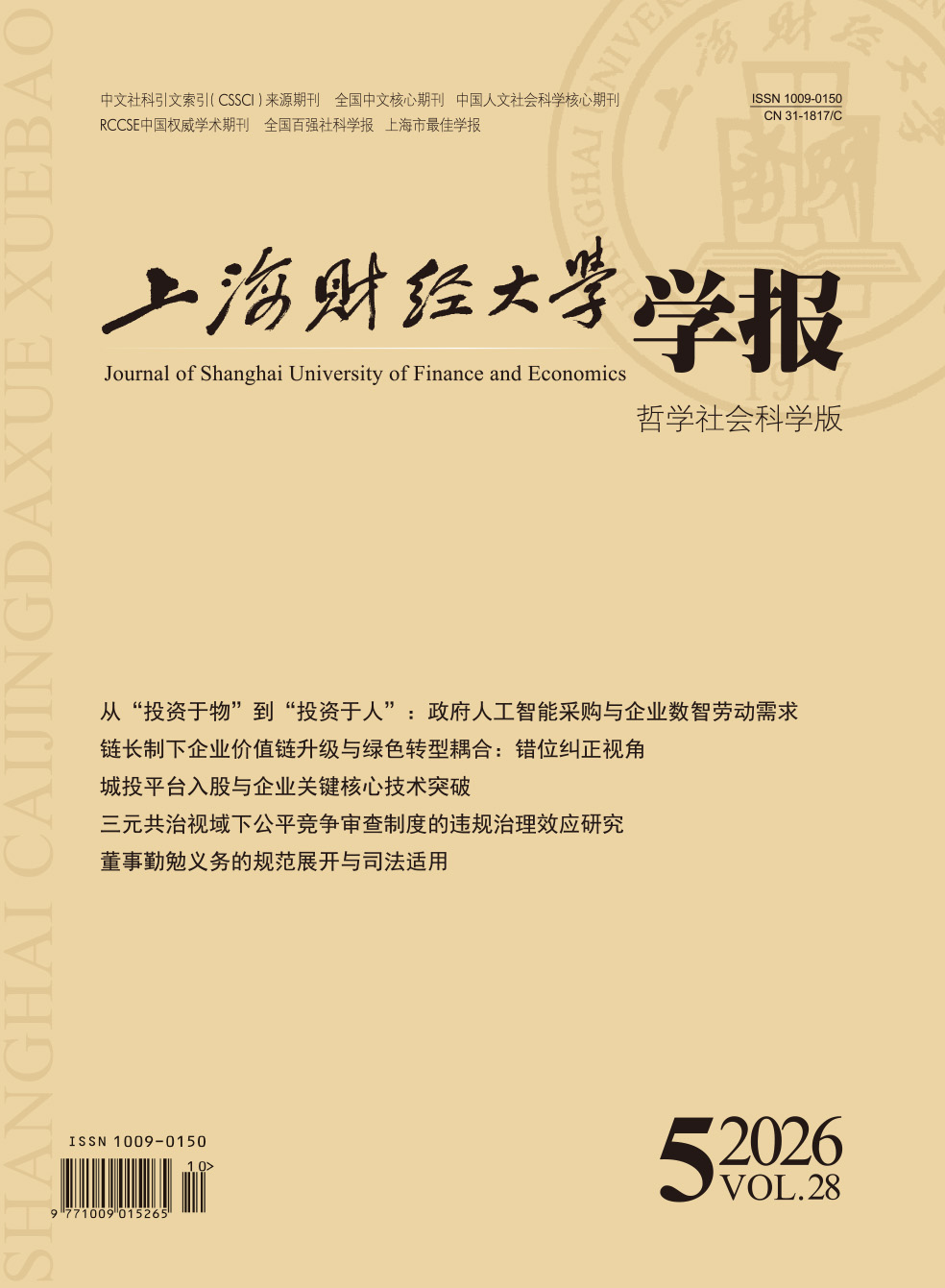
Journal of Shanghai University of Finance and Economics
LiuYuanchun, Editor-in-Chief
ZhengChunrong, Vice Executive Editor-in-Chief
GuoChanglin YanJinqiang WangWenbin WuWenfang, Vice Editor-in-Chief
Market Access Deregulation and the Effectiveness of Tax Preferential Policies: A Quasi-natural Experiment Based on the Negative List for Market Access
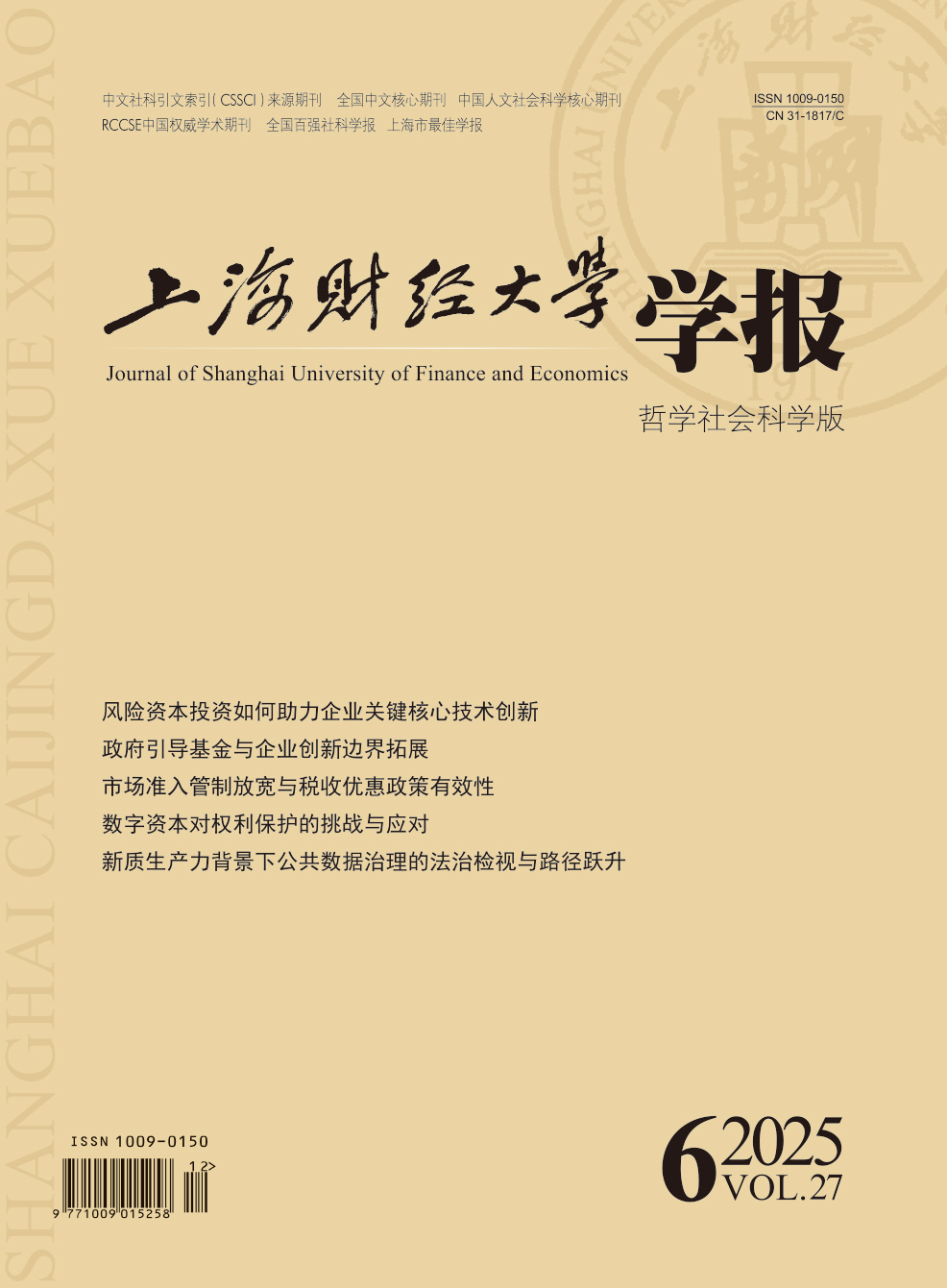
Journal of Shanghai University of Finance and Economics Vol. 27, Issue 06, pp. 33 - 48 (2025) DOI:10.16538/j.cnki.jsufe.2025.06.003
Summary
References
Summary
Cite this article
Zhou Shuya, Fang Yi, Hou Jiaqi. Market Access Deregulation and the Effectiveness of Tax Preferential Policies: A Quasi-natural Experiment Based on the Negative List for Market Access[J]. Journal of Shanghai University of Finance and Economics, 2025, 27(6): 33-48.
Export Citations as:
For