
 1402
1402  984
984New quality productive forces represent the fundamental path and key focus for resolving the dilemma of economic transformation and promoting high-quality development. However, in the practice of cultivating new quality productive forces, local governments still face three dilemmas: technology-industry disconnection, factor-demand disconnection, and policy-ecology disconnection. The National Demonstration Bases for Mass Entrepreneurship and Innovation have been entrusted with the key mission of establishing collaborative innovation channels among government, industry, academia, research, and application, gathering advantageous resources, and improving the fault-tolerance and error-correction mechanism, thus providing an institutional lever for solving the above problems. Based on panel data from 273 prefecture-level cities from 2013 to 2022, this paper takes the policy of establishing demonstration bases in batches since 2016 as a quasi-natural experiment and employs the DID method for empirical analysis. The results show that the establishment of demonstration bases significantly promotes the development of regional new quality productive forces. Mechanism testing reveals that this positive effect is achieved through three channels: activating innovation entities, leading disruptive technological innovation, and promoting digital industry agglomeration. Heterogeneity analysis indicates that the policy exerts a stronger promoting effect on new quality productive forces in regions with favorable business environments, higher industrial agglomeration, and no dependence on resources. Spatial analysis finds that the impact of demonstration bases on the new quality productive forces of surrounding areas exhibits complex spatial heterogeneity: A positive spillover effect occurs at a close distance, followed by an “agglomeration shadow area” beyond a certain distance, then positive spillover reappears after crossing that area, and finally dissipates gradually with an increasing distance. Further analysis shows that local governments’ strategic emphasis on innovation can effectively reverse geographical disadvantages: Cities with a higher innovation emphasis break through the constraints of geographical attenuation and achieve positive spillover at a long distance, while cities with lower innovation emphasis fall into the dual dilemma of “no spillover in proximity but suffering from siphoning at a medium distance”. This paper provides empirical evidence for decision-making departments to promote the development of new quality productive forces according to local conditions, and offers improvement directions for further optimizing China’s innovation policy system and promoting coordinated regional innovation development.
 / Journals / Journal of Shanghai University of Finance and Economics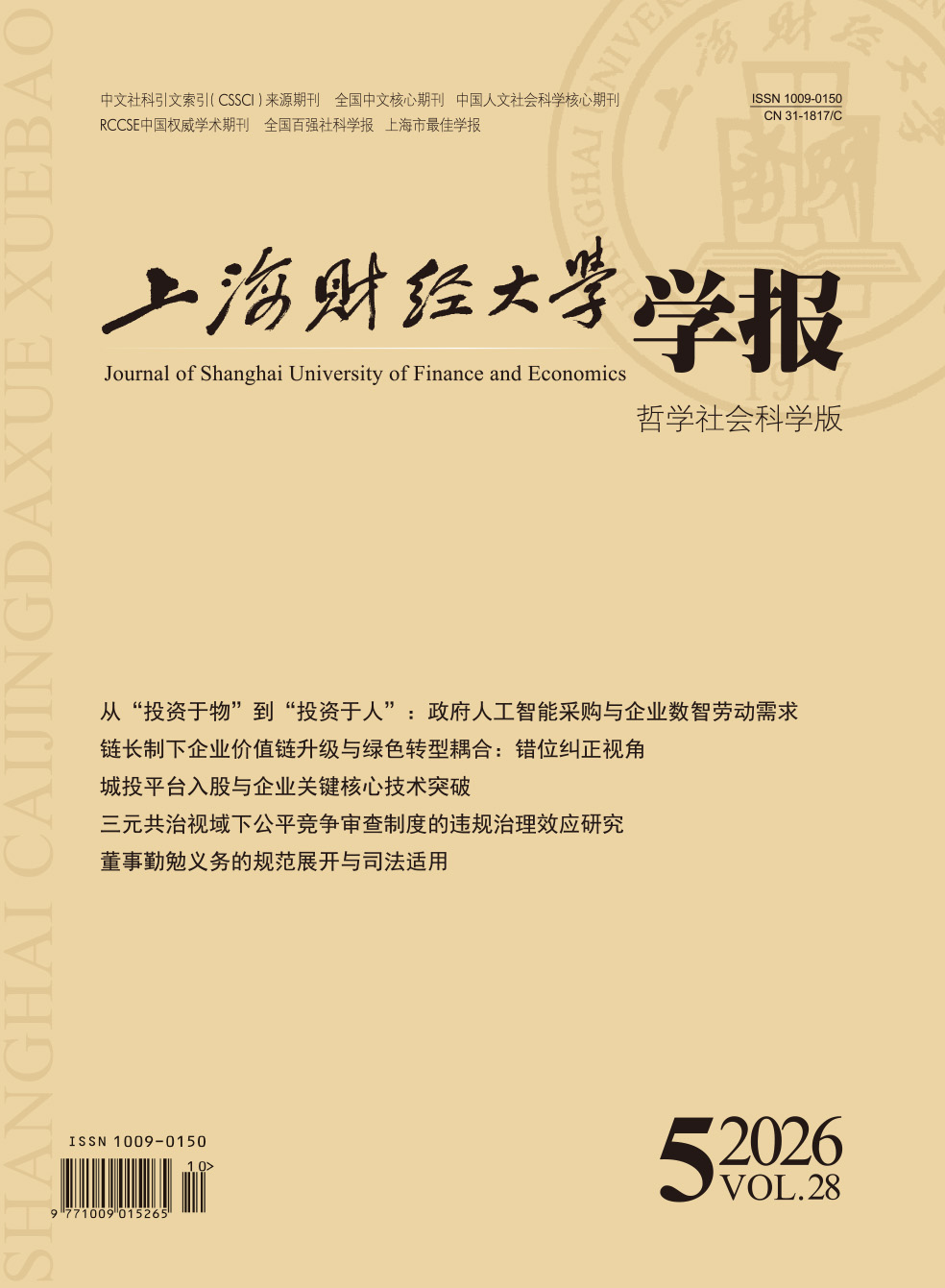
Journal of Shanghai University of Finance and Economics
LiuYuanchun, Editor-in-Chief
ZhengChunrong, Vice Executive Editor-in-Chief
GuoChanglin YanJinqiang WangWenbin WuWenfang, Vice Editor-in-Chief
The Impact of National Demonstration Bases for Mass Entrepreneurship and Innovation on Regional New Quality Productive Forces: Empirical Evidence from Chinese Cities
Journal of Shanghai University of Finance and Economics Vol. 28, Issue 05, pp. 18 - 32,124 (2026) DOI:10.16538/j.cnki.jsufe.2026.05.002
Summary
References
Summary
Cite this article
Shao Chuanlin, Yu Xiaoqi. The Impact of National Demonstration Bases for Mass Entrepreneurship and Innovation on Regional New Quality Productive Forces: Empirical Evidence from Chinese Cities[J]. Journal of Shanghai University of Finance and Economics, 2026, 28(5): 18-32.
Export Citations as:
For
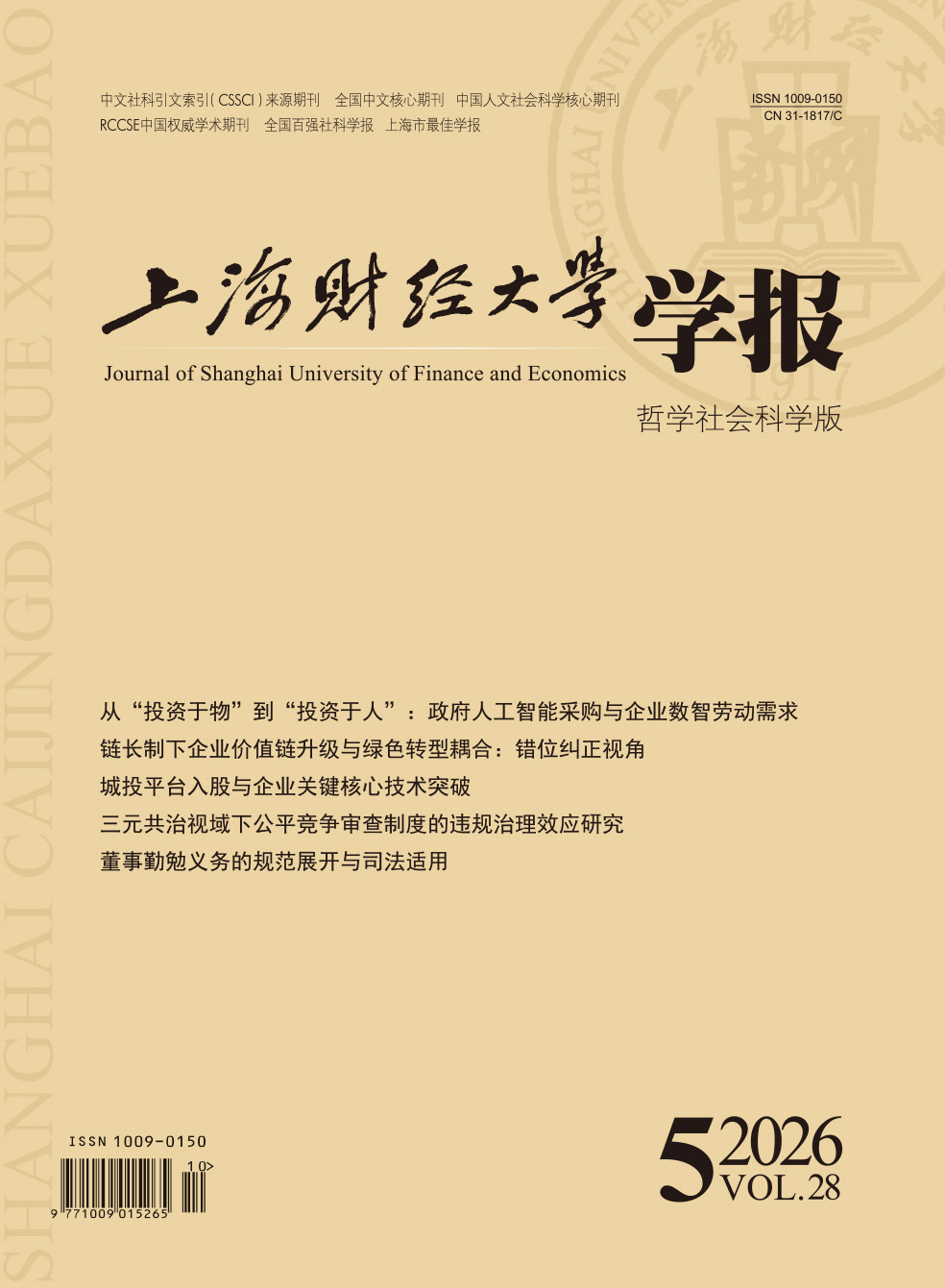
ISSUE COVER
RELATED ARTICLES