
 6935
6935  10679
10679Smart agriculture represents a critical driver of agricultural modernization and a strategic imperative for building a nationally competitive agricultural sector. Nevertheless, its advancement is constrained by practical limitations, including restricted machinery accessibility in complex terrains and elevated costs associated with data acquisition. Within this context, the low-altitude economy, centered around unmanned aerial vehicle (UAV) technology, emerges as a transformative force with substantial potential to advance smart agriculture. Drawing on provincial panel data from 2007 to 2024, this paper systematically investigates the enabling mechanism and spatiotemporal effect of the low-altitude economy on smart agriculture. The results indicate a statistically significant positive impact of the low-altitude economy on smart agriculture. The analysis identifies three principal mediating paths through which the low-altitude economy facilitates smart agriculture development: First, by enhancing operational capabilities, expanding logistical reach, and lowering managerial costs, it promotes the scaling-up of agriculture and establishes a foundation for economies of scale in the adoption of smart technologies. Second, through improvements in operation, data, and decision-making efficiency, it elevates technical efficiency in agriculture while furnishing essential economic, informational, and algorithmic trustworthiness required for smart systems. Third, by extending industrial chains both upstream and downstream and spurring new business models, it contributes to structural upgrading within the agricultural sector, thereby attracting funds and talents and accelerating the transition of smart agriculture from conceptualization to implementation. Heterogeneity analysis reveals that the promoting effect of the low-altitude economy is more pronounced in regions characterized by robust policy support—such as low-altitude airspace management reform pilot zones and central-eastern regions—underscoring the vital role of institutional backing and regional foundational conditions. Expansion analysis demonstrates that the enabling function of the low-altitude economy exhibits a positive spillover effect in the spatial dimension, benefiting not only local but also neighboring regions’ smart agriculture development; and it displays a sustained long-term effect in the time dimension, affirming its enduring potential as an enabling vector for agricultural transformation. This paper offers theoretical underpinnings and practical insights for scientifically evaluating the integrated benefits of the low-altitude economy and refining policy frameworks to harness its role in empowering smart agriculture.
 / Journals / Journal of Shanghai University of Finance and Economics
Journal of Shanghai University of Finance and Economics
LiuYuanchun, Editor-in-Chief
ZhengChunrong, Vice Executive Editor-in-Chief
GuoChanglin YanJinqiang WangWenbin WuWenfang, Vice Editor-in-Chief
From Traditional Agriculture to Smart Agriculture: Theoretical Mechanisms and Empirical Examination of the Low-altitude Economy Empowering Development
Journal of Shanghai University of Finance and Economics Vol. 27, Issue 06, pp. 107 - 121 (2025) DOI:10.16538/j.cnki.jsufe.2025.06.008
Summary
References
Summary
Cite this article
Zhang Junwei, Du Jianjun. From Traditional Agriculture to Smart Agriculture: Theoretical Mechanisms and Empirical Examination of the Low-altitude Economy Empowering Development[J]. Journal of Shanghai University of Finance and Economics, 2025, 27(6): 107-121.
Export Citations as:
For
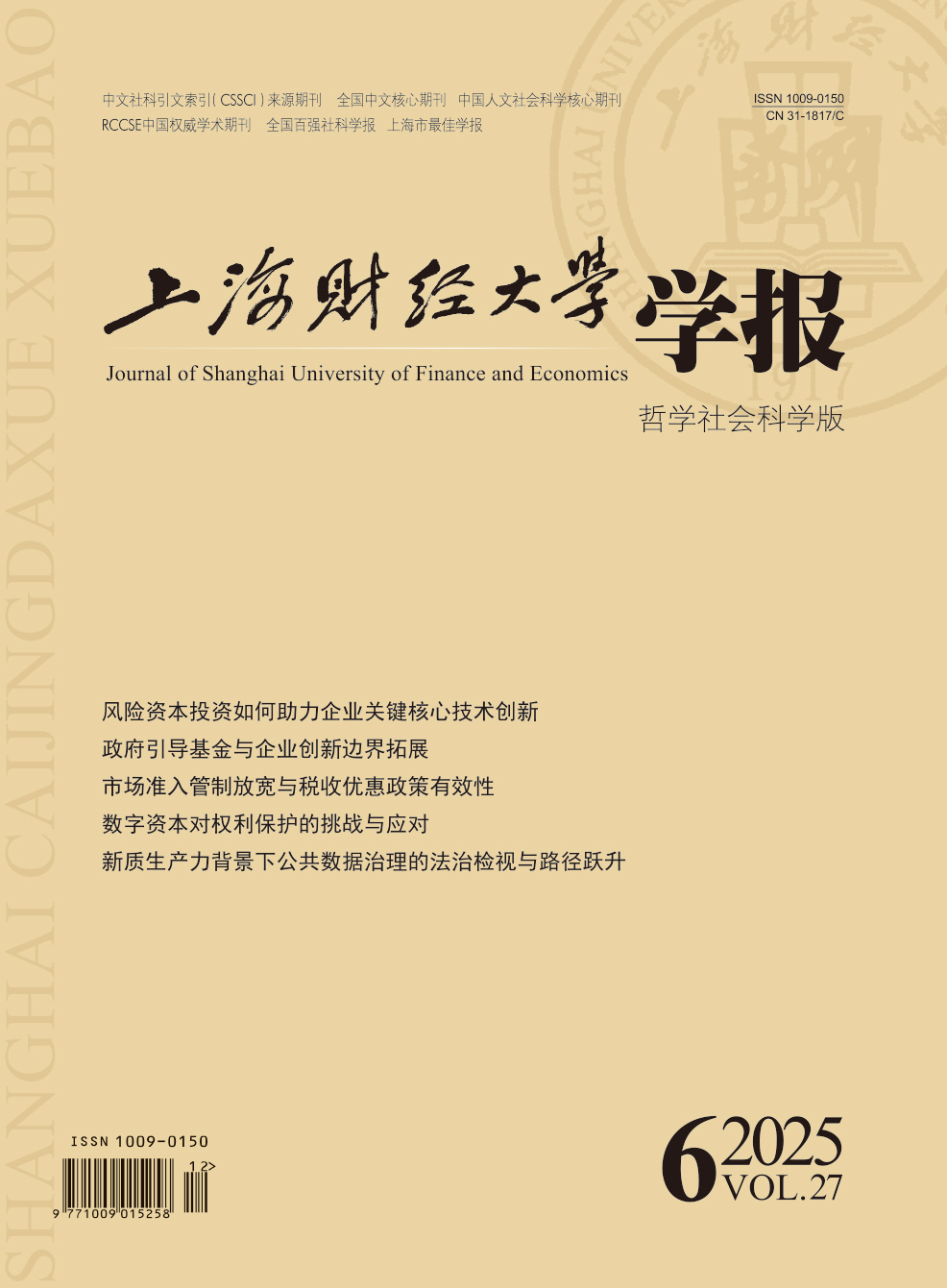
ISSUE COVER
RELATED ARTICLES