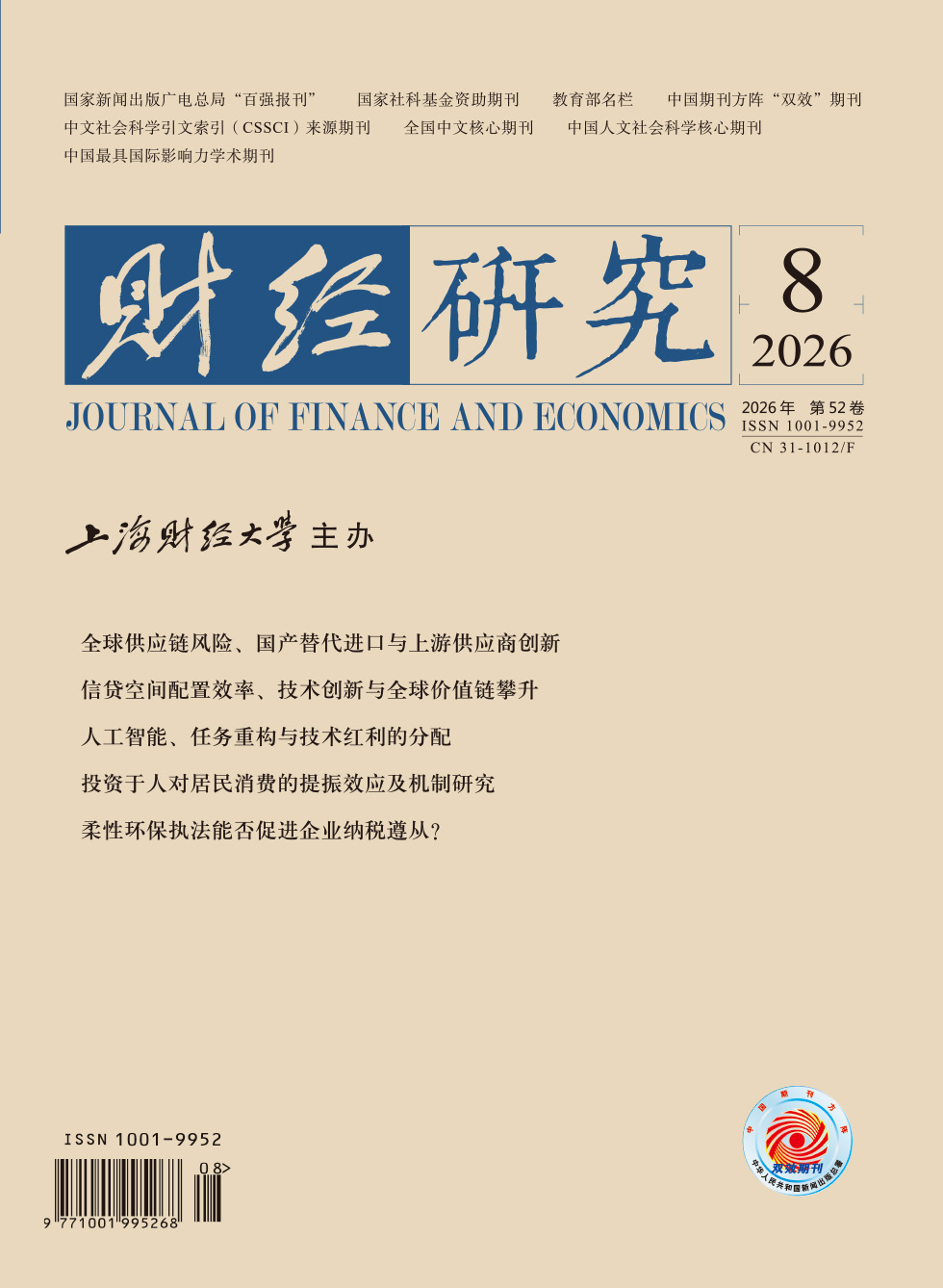
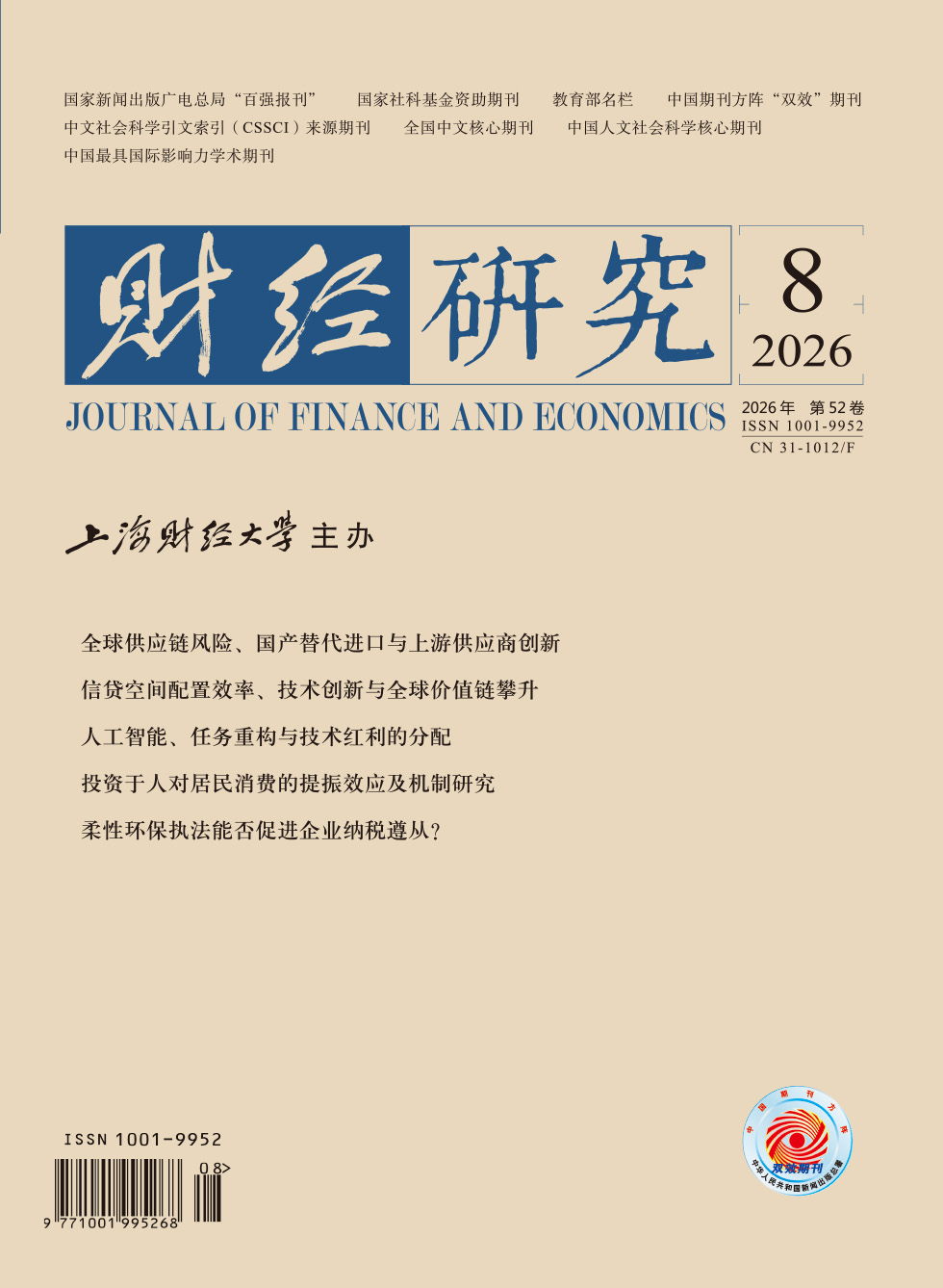
Will Flexible Environmental Enforcement Promote Corporate Tax Compliance? Evidence from the Principle of “No Penalty for First Violation” in Ecological Environments
1.School of Economics and Management, Nanjing Agricultural University, Nanjing 210095, China 2.School of Economics, Fudan University, Shanghai 200433, China 3.China Center for Economic Studies, Fudan University, Shanghai 200433, China
In the modern environmental governance system, strengthening environmental regulation is an inevitable choice for driving corporate green transformation. However, the rising costs of environmental compliance may also stimulate tax avoidance, posing a potential threat to the integrity of the national tax base. Meanwhile, the principle of “no penalty for first violation” in ecological environments, as an innovative practice of flexible environmental enforcement, raises a key question: Will the signal of flexible enforcement prompt firms to transfer compliance costs through tax avoidance, or will it foster cooperation expectations and psychological contracts that enhance tax compliance?
Drawing on a semantic analysis of 2013–2023 texts from the official WeChat accounts of 30 provincial ecological environment bureaus, this paper finds that the principle of “no penalty for first violation” exerts a stronger inhibitory effect on corporate tax avoidance in regions where the principle is viewed more favorably. In mechanism analysis, this paper integrates the cash holding theory with the theoretical framework of behavioral economics and information economics, examining the transmission effects of operating cost ratio, institutional investors’ attention, and regional business environments. Further analysis reveals that when flexible environmental enforcement is combined with two other types of environmental policies, it yields significant synergistic effects. Moreover, flexible environmental enforcement also changes the behavior patterns of firms and has a positive impact on market reputation and innovation investment.
This paper makes the following contributions: First, it extends the analytical scope of flexible enforcement research beyond market regulation and tax inspection into the environmental domain, providing unique empirical evidence for flexible enforcement reforms. Second, by building a theoretical bridge between environmental governance and corporate tax decisions, it illuminates the behavioral pathways through which flexible environmental enforcement affects tax compliance, expanding the interdisciplinary theoretical framework linking environmental policies and tax behaviors. Third, it innovates the measurement of law enforcement intensity by constructing a multi-dimensional semantic index based on massive official WeChat account texts, offering a replicable methodological reference for identifying causal relationships between policy text analysis and corporate behaviors.
Flexible Environmental Law Enforcement Index of Chinese A-share Listed Companies from 2013 to 2023
336.4 (KB)
2
The degree of corporate income tax avoidance of Chinese A-share listed companies from 2013 to 2023
371.9 (KB)
3
Control variables for Chinese A-share listed companies from 2013 to 2023 (enterprise size, current asset ratio, book to market ratio, price to book ratio, board size, audit opinion type, industry clustering degree, GDP growth rate)
856.2 (KB)
4
Instrument variables of Chinese A-share listed companies from 2013 to 2023 (spherical distance from the first pilot cities)
342.4 (KB)
5
Mechanism inspection of Chinese A-share listed companies from 2013 to 2023 (operating costs, investor concerns, business environment)
502.6 (KB)
6
Alternative indicators for tax avoidance degree of Chinese A-share listed companies from 2013 to 2023 (long-term effective tax rate, accounting tax difference)
476.3 (KB)
7
Exclusion of Competitive Policies for Chinese A-share Listed Companies from 2013 to 2023 (Golden Tax Phase III, Value Added Tax Electronic Invoice Reform)
339.7 (KB)
8
Other robustness tests of Chinese A-share listed companies from 2013 to 2023 (excluding heavily polluted enterprises and the impact of COVID-19 epidemic)
343.4 (KB)
9
Heterogeneity test of Chinese A-share listed companies from 2013 to 2023 (audit institutions, equity concentration, regional tax collection and management efforts, regional fiscal pressure)
398.5 (KB)
10
Further analysis of Chinese A-share listed companies from 2013 to 2023 (analysis of the combined effects of corporate business strategy adjustments, first violation penalties, and environmental policies)
600.5 (KB)
11
Data and Program Code
2631.8 (KB)
12
Chart
289.1 (KB)
Cite this article
Lu Juan, Luan Yuqing, Chen Shiyi. Will Flexible Environmental Enforcement Promote Corporate Tax Compliance? Evidence from the Principle of “No Penalty for First Violation” in Ecological Environments[J]. Journal of Finance and Economics, 2026, 52(8): 109-123.




 736
736  458
458